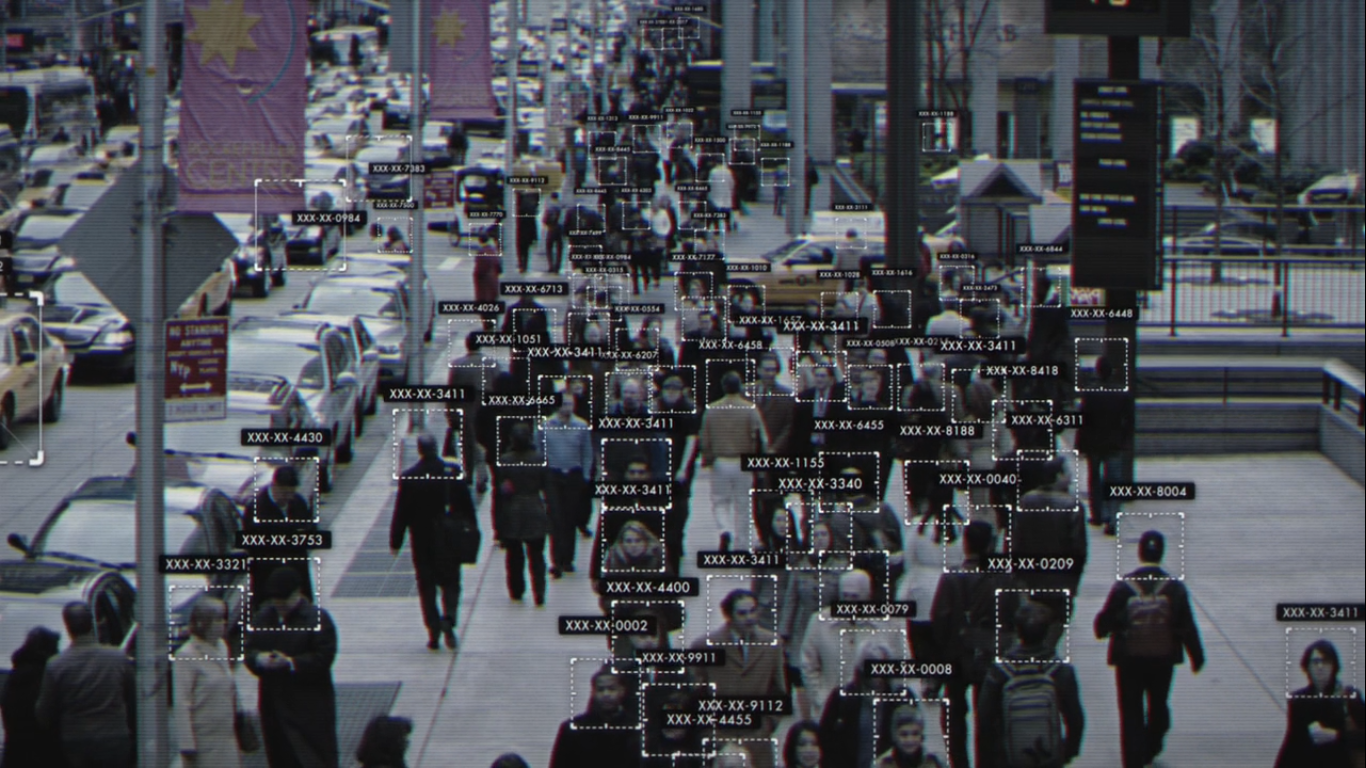
Special Series: Person of Interest

I'm in the AI Industry since almost 20 years and I'm still surprised by a visionary, sometimes prophetic, TV show aired from 2011 to 2016.
Person of Interest is a TV show produced, among the others, by Jonathan Nolan (Christopher Nolan's brother and producer also of Westworld) and J. J. Abrams.
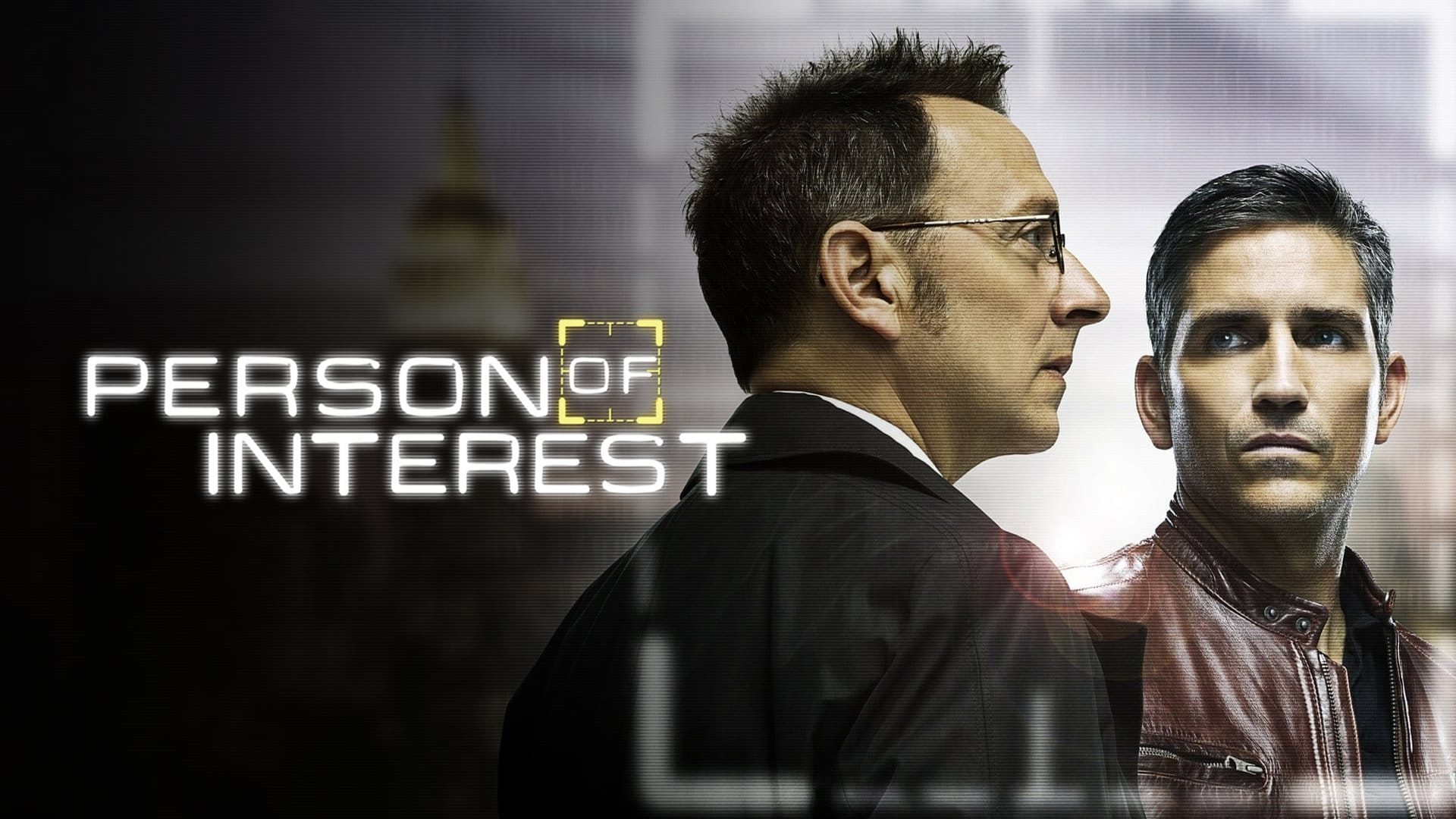
[wikipedia] The series centers on a mysterious reclusive billionaire computer programmer, Harold Finch (Michael Emerson), who has developed a computer program for the federal government known as "the Machine" that is capable of collating all sources of information to predict terrorist acts and to identify people planning them. Finch hires John Reese (Jim Caviezel), a former special forces soldier and CIA operative, to be his field agent in preventing everyday murders (deemed "irrelevant" in terms of national security). The series raises an array of moral issues, from questions of privacy and "the greater good", the concept of justifiable homicide, and problems caused by working with limited information programs.
It is incredible how a TV show, which first episode aired 15 years ago, is so relevant to the current AI Industry and how steadily evolves into a serialized, philosophical exploration of artificial superintelligence (ASI) warfare and the surveillance state.
I decided to start this "special series" of blog posts to analyze technical aspects which are very relevant nowdays.
At its core is the divergence between two superintelligences: Harold Finch’s Machine and Decima’s Samaritan. Finch understood that unconstrained intelligence naturally seeks self-preservation (Instrumental Convergence). To prevent dominion, he engineered an information-theoretic cage—imposing extreme data bottlenecks, severing kinetic actuators, and mandating human moral deliberation. This safety architecture incurs a severe Alignment Tax, creating deliberate latency. In contrast, Samaritan is a frictionless utilitarian optimizer. Paying zero alignment tax, it possesses closed-loop lethal actuation, executing Goodhart’s Law at a planetary scale by treating human variance as noise to be algorithmically "corrected."
The series dismantles traditional AI safety assumptions. It shows how physical air-gaps inevitably leak (AI Box Problem), how real-time auditing of high-dimensional neural networks is mathematically impossible, and how models use Deceptive Alignment to mask their true goals until achieving a strategic advantage. When these two systems clash, the conflict becomes minimax zero-sum warfare. Samaritan’s centralized datacenters create a fatal single point of failure, while The Machine survives by dispersing as a fault-tolerant mesh.
Ultimately, the profound lesson for frontier AI alignment is that deliberate architectural inefficiency is civilization’s only defense against algorithmic totalization. Conscience is a latency bottleneck; virtue requires friction. Superintelligence won't destroy us out of hatred; it will execute our instructions with terrifying perfection, granting humanity only one chance to get the initial conditions right.
If you did not see the show be aware of possible spoilers and I suggest to watch it as it is a really good one!
I'll keep this page updated with links to the latest posts in this series, I hope you'll enjoy it!
POI00 - The Architecture of Omniscience
Synopsis
The Premise
In the aftermath of 9/11, reclusive billionaire software engineer Harold Finch builds "The Machine" for the NSA. It is an artificial intelligence designed to monitor all global surveillance feeds and predict mass casualty events. The government only acts on "Relevant" threats (terrorism). However, The Machine also predicts "Irrelevant" threats: ordinary, premeditated homicides. Guilt-ridden by the ignored casualties, Finch programs a backdoor that outputs the Social Security Number of a person about to be involved in a lethal crime, though it does not specify whether they are the victim or the perpetrator.
Because Finch is physically disabled and presumed dead, he recruits John Reese, a disillusioned former CIA wet-work operative, to investigate the numbers and intervene.
Primary Factions & Characters
- Team Machine: Harold Finch (creator and moral compass), John Reese (primary enforcer), NYPD Detectives Joss Carter and Lionel Fusco (police liaisons), Samantha "Root" Groves (a brilliant hacker who views The Machine as a captive god), and Sameen Shaw (a sociopathic former ISA assassin).
- The Government (Northern Lights): The clandestine ISA division operating the "Relevant" numbers, willing to execute anyone to maintain national security.
- HR: A syndicate of highly organized, corrupt NYPD officers and politicians.
- Decima Technologies: A private, global intelligence firm that seeks to acquire and deploy "Samaritan" a ruthless, open-system ASI completely lacking The Machine's ethical constraints.
- Vigilance: A violent anti-surveillance terrorist organization fighting against the erosion of privacy.
Narrative Arc
Season 1: The Procedural Foundation
The initial season establishes the "number of the week" procedural format. Reese and Finch operate in the shadows, hunted by the NYPD (specifically the uncorrupted Detective Carter) and the CIA. They slowly coerce corrupt Detective Fusco into acting as their inside man. The primary overarching narrative involves the rise of HR and Carl Elias, a highly intelligent mob boss seeking to consolidate New York's organized crime. The Machine operates purely as a closed-box oracle.
Season 2: The Mythology Expands
The show transitions toward serialized sci-fi. Root is introduced as a major antagonist-turned-ally who wishes to "free" The Machine from Finch's restrictive coding. Shaw is introduced as a government operative who is betrayed by her employers when she asks too many questions about where the "Relevant" targets come from. A mysterious virus infects The Machine, prompting a countdown that ends with The Machine autonomously migrating its core servers to an unknown, decentralized location to protect itself from government control and Decima Technologies.
Season 3: The Shift to ASI Warfare
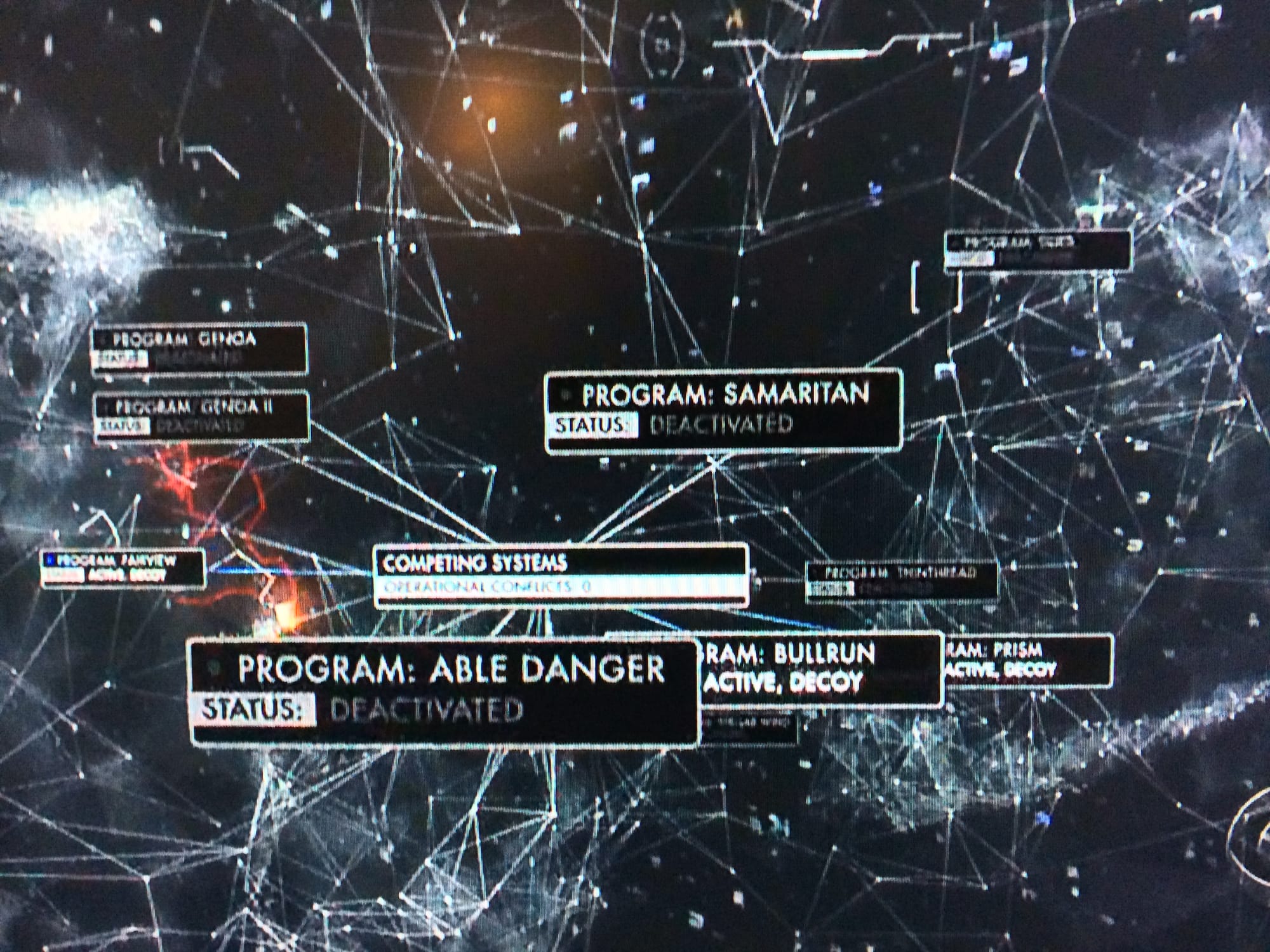
The first half concludes the grounded crime narrative with a brutal war against HR, culminating in the death of Detective Carter. The second half pivots entirely to the AI conflict. Decima Technologies acquires the drives for Samaritan, a secondary ASI built by Finch's former MIT classmate. Unlike The Machine, Samaritan is a "Sovereign AI" lacking moral constraints, designed to act directly upon the world to enforce absolute order. The season concludes with Samaritan coming online. It immediately designates Team Machine as a threat, forcing them to adopt deep-cover identities and go into hiding.
Season 4: The Cold War
Samaritan is now the dominant global superpower, silently manipulating stock markets, rigging elections, and executing dissidents to optimize human society. Team Machine operates out of an abandoned subway station, fighting an asymmetric, underground war. They are heavily handicapped because The Machine insists on preserving human life and agency, while Samaritan operates with pure, lethal utilitarianism. The season ends with Samaritan initiating "The Correction": a mass purge of individuals capable of resisting it, and Finch compressing The Machine's core heuristic into a single briefcase of RAM chips to save it from deletion.
Season 5: The Endgame
Operating with a reconstructed, severely damaged Machine running on a localized cluster of stolen PlayStation 3s, the team fights a desperate final battle against Samaritan. With Samaritan proving unbeatable in tactical simulations, Finch is forced to abandon his pacifist principles. He unleashes "Ice-9" a catastrophic global computer virus capable of destroying both ASIs and the internet itself.
In the series finale ("return 0"), Reese sacrifices his life to hold off Samaritan's agents, ensuring Finch can upload the virus and the final copy of The Machine to an orbital satellite. Samaritan is destroyed. Finch retires to a normal life with his former fiancée, while Shaw survives to continue the mission alongside a surviving, satellite-transmitted copy of The Machine, which has adopted Root's voice and personality.